Key Takeaways
-
The early symptoms of dementia include memory loss, confusion, mood changes and difficulty remembering words, names and places.
-
The symptoms are often mild at first and are collectively known as mild cognitive decline.
-
Doctors use a combination of diagnostic tests, including memory assessments, blood tests and brain scans, to diagnose dementia.
-
The Cognitive Health & Memory Assessment from Scan.com includes a brain MRI and a blood test for markers of dementia, with a full expert consultation for a fast assessment.
Early Signs and Symptoms of Dementia
Dementia affects people differently. In the very early stages, the signs can be mild and easy to miss or pass off as something else. The most common early symptoms of dementia include:
-
Memory loss
-
Short- and long-term memory problems
-
Repeating stories and questions
-
Difficulty concentrating on tasks and conversations
-
Getting confused over times, places and familiar tasks
-
Experiencing difficulty organising and planning things
-
Forgetting words, names and places
-
Changes in mood, such as anxiety, depression and irritability
-
Losing interest in things you used to enjoy
These symptoms are usually mild at first and may go unnoticed. They’re collectively known as mild cognitive impairment.
When to Seek Medical Advice
Getting tested for dementia is daunting, but the sooner you know, the earlier you and your family members can act. In some cases, medications can slow down the progress of dementia, and they’re most effective if used in the early stages of the disease. An early diagnosis can also make planning for the future a little easier.
If you’re experiencing early dementia symptoms, such as memory loss and confusion and you or your family members notice that they’re becoming more consistent or they’re gradually becoming worse, you should consider seeking medical advice.
It’s up to you whether you decide to speak to your GP in the first instance, or seek care privately. By going privately, you can directly access a memory and cognitive health clinic without needing to go on a waiting list or seeing your GP first.
Initial Assessment By a GP
If you do decide to visit your GP, they will carry out an initial assessment, during which they’ll ask you some questions to test your memory and recall. You don’t need to prepare for these questions, and your GP will understand that you might be feeling nervous about getting them right. There is no ‘pass’ or ‘fail’, and struggling over an answer doesn’t mean you have dementia.
It might be beneficial to take a family member or trusted loved one with you to help you speak about your symptoms and ask questions. They can also describe any changes they might’ve noticed. You may also find it helpful to write down your most important questions.
Your GP and any subsequent medical professionals you see may speak about ‘cognitive impairment’. Cognition describes memory and thinking, and our ability to think, remember, converse, reason and problem-solve. Cognitive impairment describes changes in cognition that might begin to affect day-to-day life.
Understanding Your Medical History
During your appointment, your GP will ask questions about your symptoms, including what they are, how they affect you, how long you’ve had them and if they’re getting worse.
They’ll also check your medical history and ensure that any existing conditions, such as diabetes or heart disease, are being monitored and properly controlled. If you’re taking any medications, they’ll perform a quick review to make sure they’re still right for you.
If your GP thinks you may be experiencing the early symptoms of dementia, they’ll refer you to a specialist for further diagnostic tests.
Tests Used to Diagnose Dementia
There’s no single test for dementia. Instead, doctors use results from a combination of tests and assessments, including memory assessments, blood tests and brain scans, to make a diagnosis.
Which tests you or a loved one has will depend on the symptoms and their severity. They may be carried out at a specialist memory clinic or hospital, or by a combination of doctors and centres. Private options and NHS pathways are both available.
Cognitive Screening Tests, Memory Tests and Questionnaires
There are several cognitive tests doctors use to assess memory and thinking and diagnose dementia (or rule it out). They’re question-based and similar to the tests you may have had at your GP surgery.
Different doctors use different cognitive assessment tests, but they all include questions designed to test:
-
Short- and long-term memory
-
Concentration and attention span
-
Orientation (your awareness of time and place)
-
How you communicate and use language
Again, these questions only form one part of diagnosing dementia, and struggling to remember the correct answer doesn’t mean you have dementia. Each question has a score, and these scores are added up and used in conjunction with the results of blood tests and brain scans (see below) to make a dementia diagnosis.
General Practitioner Assessment of Cognition
A General Practitioner Assessment of Cognition (GPCOG) is an initial memory and thinking test used by GPs to assess mild cognitive impairment. Depending on the results, your GP may refer you to a specialist for further tests.
Mini-Mental State Examination
A mini-mental state examination (MMSE) is a cognitive screening test used by specialist doctors that gives more information about cognitive impairment than a less formal GPCOG assessment.
Montreal Cognitive Assessment
The Montreal Cognitive Assessment (MoCA) is similar to the MMSE, with slightly different questions, and is also used to detect early-stage dementia.
Addenbrooke’s Cognitive Examination
The Addenbrooke's Cognitive Examination (ACE-III) is another cognitive assessment used to evaluate cognitive impairment. It can be more sensitive in diagnosing the type of dementia, such as Alzheimer’s disease or vascular dementia.
Clock Drawing Test
Your doctor may also ask you to draw a clock with all 12 numbers and the hands set to a certain time, most commonly 10 minutes past 11 o’clock. This tests your cognitive function, including your memory and visuospatial ability.
Scans Used to Diagnose Dementia
In addition to cognitive screening and memory tests, your doctor may suggest a brain scan, most commonly, an MRI or CT scan. Not everyone will have one as part of a dementia assessment. If your memory test results strongly indicate dementia, you may not need a brain scan to get a diagnosis. Often, scans are used to rule out other conditions that might be causing cognitive symptoms similar to dementia.
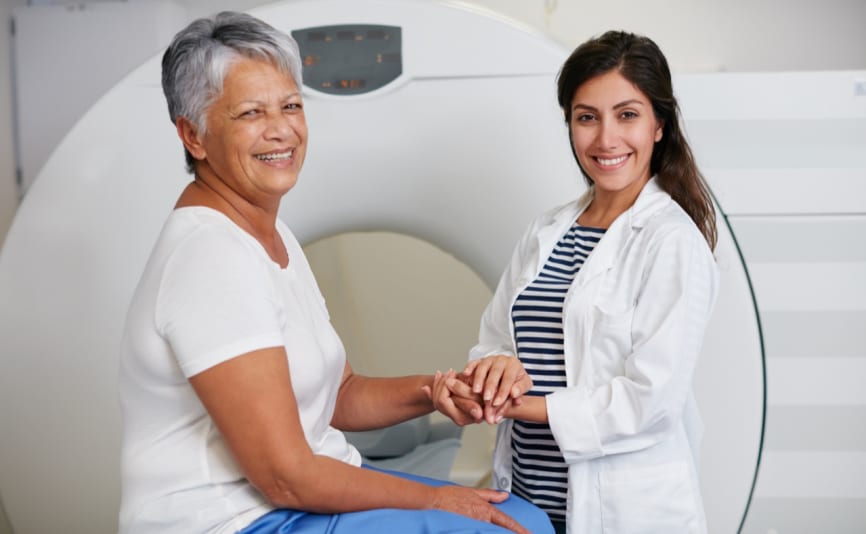
If you’re told you need a scan of your brain, it may feel frightening, but your medical team will be on hand throughout. Brain scans don’t hurt and have no known side effects, but they may make you feel overwhelmed, so bringing a family member with you can be helpful.
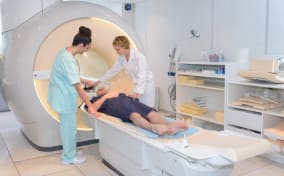
A brain scan involves lying on a medical table that either enters a tunnel-like machine in the case of an MRI scan, or remains still while the scanning machine moves around your head, in the case of a CT scan. You must remain still, but you’ll be able to talk to your medical team through an intercom.
MRI Scan
MRI (magnetic resonance imaging) scans are used to detect changes in the brain that may indicate dementia. Early-stage dementia may not show on an MRI scan, and MRI scans are used only in conjunction with other diagnostic tests to diagnose dementia. MRI is commonly used to rule out a tumour or other condition that could be causing problems with your memory.
An MRI scan can help doctors diagnose the type of disease in someone with dementia. For example, it might show damage to the brain's blood vessels, which can indicate vascular dementia. Or it might show shrinkage in parts of the brain, giving doctors an idea of the type of disease, as different types of dementia affect different parts of the brain.
CT Scan
A CT (computed tomography) scan cannot provide useful detail about the brain's structure and isn’t used alone to diagnose dementia. However, a CT scan is sometimes used to rule out other conditions that may be causing your symptoms, including a stroke or a brain tumour.
PET Scan
You may have a PET (positron emission tomography) scan if an MRI or CT scan is inconclusive. PET scans can detect abnormalities in how blood flows through the brain and how the brain functions.
SPECT Scan
A SPECT (single-photon emission computed tomography) scan is a specialised type of CT scan that uses radioactive tracers to measure brain blood flow.
DAT scan
Most brain scans used to diagnose dementia examine the brain's structure and blood vessels. A DAT (dopamine transporter) scan, on the other hand, assesses brain function. DAT scans are used to diagnose less common types of dementia, such as dementia with Lewy bodies and Parkinson’s disease dementia.
Physical Examination
Your GP and your specialist doctor may also carry out some physical tests to help support a dementia diagnosis, along with the results of your other tests. This may involve testing your:
-
Vision and hearing
-
Reflexes
-
Muscle tone and strength
-
Coordination
-
Gait (how you walk)
Blood Tests to Rule Out Other Causes
At your initial assessment for dementia, your GP may take some routine blood tests to make sure your symptoms aren’t being caused by something else, such as a vitamin deficiency or diabetes. These blood tests may check your:
-
Vitamin B12 and folate levels
-
Blood sugar levels (a blood test called an HbA1c is used to check for diabetes)
-
Liver function
-
Kidney function
-
Thyroid function
They may also ask you to produce a small urine sample to check for a urinary tract infection.
Some patients are suitable for genetic testing for dementia, especially if they have a strong family history of the disease. Speak to your GP about the possibility of genetic testing and what that might mean for you.
Referral To a Memory Clinic
If your results suggest that you have dementia, you’ll be referred to a memory clinic. You may also be referred to a memory clinic by your GP for dementia assessments to help you get a diagnosis.
A memory clinic is often based in a hospital and staffed by various medical specialists, including neurologists, mental health nurses and occupational therapists. You can access memory clinics directly via private pathways, too.
Your memory clinic will help you and your family members understand what your diagnosis means now and in the long term and will provide support for your day-to-day living when you need it.
Comprehensive Neuropsychological Testing
Comprehensive neuropsychological testing refers to the range of tests, including physical and memory assessments, blood tests and brain scans, used to diagnose dementia.
Functional and Daily Living Assessments
People with dementia can live a relatively normal life in the early stages. But in the long term, they may need help with shopping, cooking and everyday tasks.
You can speak to your GP or doctor about a care assessment, which will evaluate your current living arrangements, what you’re able to do and what you’re unable to do. It will also look at what support and care you may have available from loved ones and family members.
The purpose is to assess what care you need now, and what you might need in the future.
How Long Does Dementia Testing Take?
Diagnosing dementia involves a number of different tests, sometimes carried out at different times in different hospitals or clinics. Cognitive assessment and brain scan appointments may take up to an hour each, and NHS waiting times may mean that you have to wait some time between appointments.
Who Carries Out Dementia Testing?
If you’re concerned that you or a loved one may be experiencing the symptoms of dementia, speak to your GP. They will conduct the initial assessments and possibly some blood tests. If they think further assessments and tests are necessary, they will refer you to a specialist doctor at a memory clinic or hospital.
Receiving a Diagnosis
Getting a dementia diagnosis is understandably upsetting and frightening, and giving yourself time to adjust is important. You’ll receive care and support tailored to your individual needs.
What Happens After Diagnosis
If you’re able, it can be helpful to speak to family members and loved ones about how you’re feeling and your wishes for your future care. When you’re ready, it may also be helpful to write down your future care wishes while you’re able to make informed decisions for yourself.
Dementia Support
Your GP and specialist doctors can refer you to a specialised dementia counsellor. Many people with dementia can live independently in the early stages. Help and support are available from charities such as Dementia UK and Alzheimer’s Society.
Supporting Someone Through Testing
Seeing a family member struggle with the symptoms of dementia is just as upsetting as it is for the person experiencing them. Your GP can suggest local support groups that may help.
Private Dementia Testing
Experiencing cognitive impairment or witnessing the symptoms of dementia in a loved one is worrying. But having a clear understanding of what these symptoms may mean now can help us better prepare for the future.
The ”CognitionCheck” CognitionCheck Memory Assessment from Scan.com and Re:Cognition Health includes:
-
A state-of-the-art blood test that looks for biomarkers of dementia in the blood, called p-Tau217
-
A comprehensive memory and thinking assessment
-
An MRI brain scan
-
A consultation with a dementia expert, before and after your scan
For a one-off fee of £1,295.
You don’t need a GP referral, we’ll take care of that for you, and our expert dementia assessment is private, fast and reassuring.
References
Dementia UK. (2025, July 30). Tests for dementia – including Alzheimer’s disease - Dementia UK. https://www.dementiauk.org/information-and-support/specialist-diagnosis-and-support/tests-for-dementia/
Tests and scans to diagnose dementia. (2026, February 9). Alzheimer’s Society. https://www.alzheimers.org.uk/about-dementia/dementia-diagnosis/how-to-get-dementia-diagnosis/tests-and-scans
Website, N. (2026, January 19). Tests for diagnosing dementia. nhs.uk. https://www.nhs.uk/conditions/dementia/symptoms-and-diagnosis/tests/